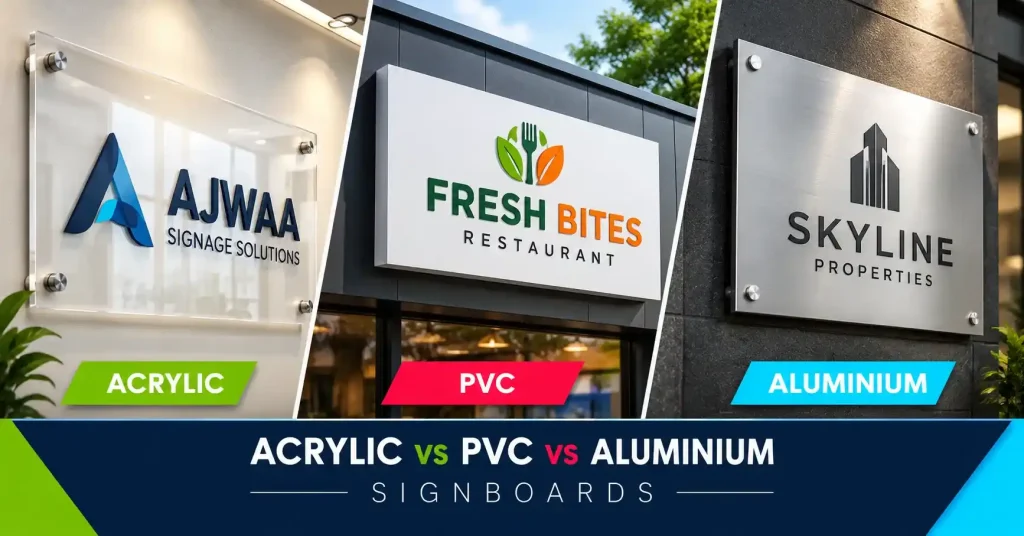
Choosing the right signboard material can make a real difference to how customers see your business. Some materials offer a glossy, premium appearance, while others focus on affordability or long lasting outdoor performance. When comparing Acrylic vs PVC vs Aluminium Signboards, it is important to consider where the sign will be installed, how much exposure it will receive and the impression you want to create. Businesses looking for Aluminium sign boards Dubai can also compare these options to find signage that suits their location, budget and branding requirements.
A shop owner opening a new outlet, for example, may prefer colourful acrylic lettering to attract attention. A warehouse manager might need a sturdy aluminium panel that remains readable outdoors. Meanwhile, a small office may benefit from PVC signs that provide a neat appearance without a large initial investment. Each material has its own strengths, so the best choice depends on the purpose of your sign rather than appearance alone.
Understanding the Three Signboard Materials
What Makes Acrylic Signboards Different?
Acrylic is a popular plastic material known for its smooth surface, attractive finish and ability to create a premium visual effect. It is available in different colours, thicknesses and finishes, making it suitable for reception logos, shop signs, illuminated lettering and modern business displays.
One major advantage is its ability to create clean, polished letters that stand out against walls and other backgrounds. Acrylic can also work with LED lighting to produce eye catching illuminated signage. This makes it especially useful for retail stores, salons, restaurants and corporate offices.
However, acrylic can crack or become scratched if handled incorrectly. The quality of the sheet, installation method and exposure to sunlight all influence its long term appearance. For businesses that value style and visual presentation, acrylic is a strong option.
What Makes PVC Signboards Practical?
PVC is a lightweight plastic material that is easy to cut, shape and print on. It is often used for promotional displays, indoor directional signs, office identification panels and temporary business signage.
Its biggest attraction is affordability. Businesses can create clear, professional looking signs without spending as much as they might on certain premium materials. PVC is also convenient when several signs are needed across an office, school, shop or commercial facility.
The main consideration is its performance in outdoor environments. Depending on the grade, thickness and installation conditions, PVC may become less suitable for prolonged exposure to strong sunlight, heat and changing weather. Choosing an appropriate grade is essential when outdoor use is planned.
Why Is Aluminium Used for Business Signs?
Aluminium is a lightweight metal valued for its strength, rigidity and resistance to rust. It is widely used for shop fascia panels, building identification signs, construction signage and commercial outdoor displays.
Unlike acrylic and PVC, aluminium provides a metal surface that suits industrial, modern and corporate designs. It can also be combined with printed graphics, acrylic lettering and illumination to create customised signage.
Its suitability for outdoor applications makes it a practical choice for businesses that need a durable sign in exposed locations. Nevertheless, the final result depends on the aluminium grade, protective coating, mounting system and overall fabrication quality.
Comparing Cost, Durability and Appearance
Which Material Offers Better Value?
The price of a signboard depends on more than the raw material. Dimensions, thickness, printing, lighting, fabrication, mounting and installation can all influence the final quotation.
PVC is often economical for simple printed panels and indoor displays. Acrylic can cost more when the design includes thick letters, multiple layers or integrated LED lighting. Aluminium pricing varies according to panel thickness, surface treatment, fabrication and finishing requirements.
When evaluating Acrylic vs PVC vs Aluminium Signboards, compare the complete project cost rather than selecting a material based only on its starting price. A cheaper sign may not offer the best value if it needs replacing sooner than expected.
How Do They Perform Over Time?
Aluminium generally performs well in outdoor environments because it does not rust like ordinary steel. However, its finish, fasteners and surrounding installation materials still require appropriate protection.
Acrylic can retain an attractive appearance when good quality material is installed and cleaned correctly. Its main weaknesses include scratching and potential cracking from impact. PVC is suitable for many indoor applications, although some grades may lose strength or change appearance after extended exposure to harsh outdoor conditions.
No material is completely maintenance free. The expected lifespan depends on environmental exposure, product quality, installation and routine care.
Which Material Looks Best?
Acrylic is often preferred for glossy lettering, colourful branding and illuminated displays. PVC provides a simple, clean appearance for printed information and practical signs. Aluminium creates a solid, professional look that suits building exteriors, industrial premises and corporate facilities.
The right finish should complement the building, brand colours and viewing distance. A small reception logo has different requirements from a large roadside sign that must be visible to passing motorists.
Choosing the Right Signboard for Your Business
Best Applications for Acrylic
Acrylic is a suitable choice when visual impact is a priority. It works particularly well for reception logos, decorative wall lettering, retail displays and illuminated shop signage.
For example, a beauty salon may choose polished acrylic letters with soft LED illumination to create an elegant atmosphere. A technology company might prefer clear or coloured acrylic lettering against a contrasting reception wall.
Before selecting acrylic, consider whether the sign will be exposed to direct sunlight, physical contact or possible impact. Proper thickness and secure mounting can improve performance and help preserve its appearance.
Best Applications for PVC
PVC is useful for indoor signs where affordability, easy fabrication and clear messaging matter most. It can be used for room identification, promotional boards, informational panels and short term campaigns.
A business with multiple departments may install matching PVC signs throughout its premises to maintain consistent branding. Shops can also use printed PVC panels for promotions that change regularly.
For outdoor projects, ask about the specific PVC grade and its suitability for local conditions. Not every PVC sheet is designed for continuous exposure to strong sunlight and high temperatures.
Best Applications for Aluminium
Aluminium is often the preferred option for exterior panels, commercial building signs, warehouse identification and construction site displays. It offers a rigid structure while remaining relatively lightweight compared with many other metals.
For businesses operating in Dubai, the combination of heat, dust and strong sunlight makes material selection especially important. A properly specified aluminium sign with suitable coatings and secure fixings can be a sensible choice for exposed locations.
It can also be combined with acrylic letters or printed graphics, giving businesses the structural benefits of metal with additional design flexibility.
How Dubai’s Climate Affects Signboard Selection
Heat, Sunlight and Dust
Outdoor signage in Dubai must be selected with local environmental conditions in mind. High temperatures, direct sunlight and dust can affect surfaces, printed graphics, adhesives and mounting components in different ways.
Acrylic and PVC products should be chosen according to their intended exposure and manufacturer recommendations. Aluminium can be suitable for exterior applications, but protective finishes and compatible fasteners remain important.
Regular inspection and gentle cleaning help remove accumulated dust and maintain readability. Use cleaning products recommended for the particular material because harsh chemicals or abrasive tools can damage polished surfaces and printed finishes.
Installation and Lighting Considerations
Even a high quality sign may perform poorly if it is installed incorrectly. The mounting surface, wind exposure, panel dimensions and weight should be assessed before installation. Larger exterior signs may require a suitable supporting structure and professional fixing methods.
For illuminated signage, electrical components, weather protection and access for future servicing should also be considered. LED systems can provide effective illumination, but the complete design must account for heat management and safe electrical installation.
A professional signage supplier can assess the location and recommend a practical combination of materials, finishes and lighting.
Acrylic vs PVC vs Aluminium Signboards: Which Should You Choose?
There is no single material that suits every business. Acrylic is an excellent option for attractive lettering and premium visual displays. PVC is practical for budget conscious indoor signage and printed panels. Aluminium is particularly useful when a rigid, professional sign is required for an outdoor or commercial environment.
Before making your decision, consider these points:
• Budget: Decide how much you can spend on fabrication and installation.
• Location: Identify whether the sign will be indoors, outdoors or exposed to direct sunlight.
• Appearance: Choose a finish that supports your branding and building design.
• Purpose: Determine whether the sign is decorative, informational, promotional or intended for long term identification.
• Maintenance: Consider cleaning requirements, access and expected exposure.
Request quotations based on the same dimensions and specifications so you can compare options fairly. This approach makes it easier to understand the difference between material costs and the additional work required to produce a finished sign.
Frequently Asked Questions
1. Which signboard material is best for outdoor use?
Aluminium is often suitable for outdoor signboards because it is lightweight, rigid and resistant to rust. Its overall performance depends on the grade, protective finish, mounting hardware and installation quality. Acrylic and suitable PVC products can also work outdoors when specified for the intended conditions.
2. Are acrylic signboards more expensive than PVC signs?
Acrylic signs can cost more than basic PVC panels, particularly when they include dimensional lettering, polished edges or LED lighting. However, the price depends on size, thickness, design complexity and installation. Comparing complete quotations is the best way to identify the right option for your budget.
3. Can aluminium signboards include acrylic letters?
Yes, aluminium panels can be combined with acrylic lettering to create attractive business signage. The aluminium provides a rigid base, while acrylic adds colour, depth and a polished appearance. Depending on the design, LED lighting can also be incorporated to improve visibility during evening hours.
4. Is PVC suitable for business signage in Dubai?
PVC can be suitable for indoor office signs, promotional displays and other applications where affordability is important. For outdoor use in Dubai, select a grade designed for the expected sunlight and temperature exposure. Always check manufacturer recommendations before choosing PVC for permanent exterior installation.
5. How can I choose the right signboard company in Dubai?
Look for a company that understands material selection, fabrication, installation and local environmental conditions. Review its previous projects, discuss your design requirements and request a detailed quotation. A reliable supplier should explain the advantages and limitations of each material before recommending a suitable solution.
Conclusion
Choosing between acrylic, PVC and aluminium comes down to your business goals, installation location, design preferences and budget. Acrylic offers an attractive finish for premium branding, PVC provides an economical solution for many indoor applications, and aluminium delivers a strong option for commercial exterior signage. Understanding these differences helps you invest in a sign that looks professional and serves its intended purpose.
When comparing Acrylic vs PVC vs Aluminium Signboards, focus on the complete installation, expected exposure and long term value rather than price alone. The right material can strengthen brand recognition, improve visibility and create a positive first impression for customers.
For tailored advice on materials, design and installation, contact Explore Our Signage Solutions and discuss the requirements of your project. Choose signage that reflects your brand, suits your location and helps your business stand out across Dubai and the UAE.