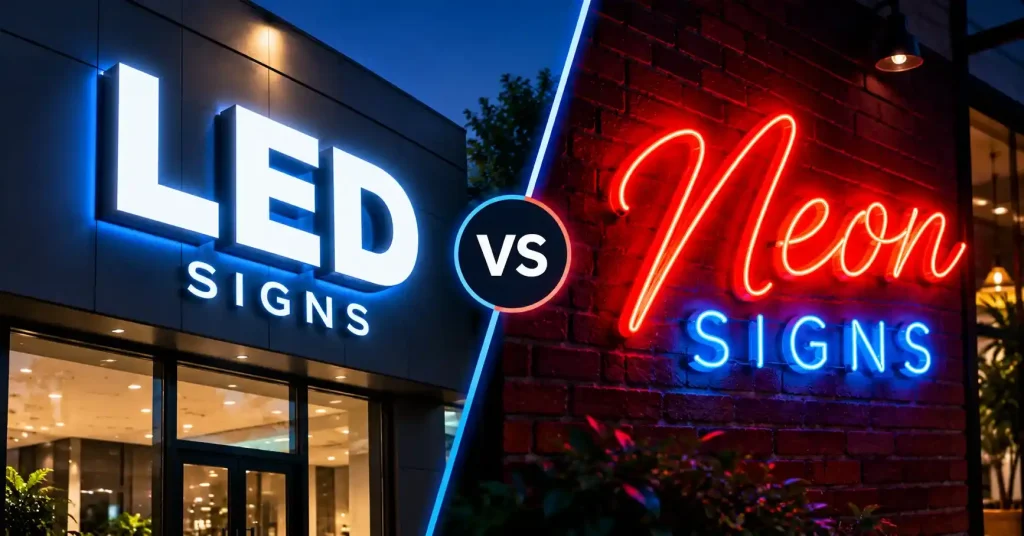
Choosing the right illuminated display can make a noticeable difference to your business visibility, branding and electricity bills. When comparing LED vs Neon Signs, it is important to look beyond appearance and consider energy consumption, lifespan, maintenance and installation requirements. Traditional neon offers a distinctive glow, while modern LED technology provides flexible designs and efficient lighting options. Businesses looking for Illuminated Signage Dubai can explore both choices to find a solution that suits their storefront, restaurant, office or showroom. Understanding how these technologies differ helps you make a practical investment that balances visual appeal, running costs and long term performance.
What Is the Difference Between LED and Neon Signs?
LED and traditional neon signs both produce illuminated displays, but they create light in different ways. Traditional neon signs use sealed glass tubes containing gas. When electricity passes through the gas, it produces a characteristic glow. The tubes can be shaped into letters, symbols and decorative designs.
LED signs use light emitting diodes, which produce light when electrical current passes through semiconductor materials. These components can be arranged in modules, strips or flexible tubing to create different effects.
Traditional Neon Sign Technology
Traditional neon is known for its smooth glow and distinctive appearance. It is often associated with classic storefronts, bars, restaurants and decorative displays. Different gases and phosphor coatings can produce different colours.
However, glass tubing is relatively fragile and usually requires specialist manufacturing and careful installation. Businesses should consider these requirements when choosing signs for busy commercial environments.
Modern LED Sign Technology
LED signs offer flexibility in size, shape, colour and brightness. They can be used for individual letters, illuminated logos, light boxes and flexible neon style designs.
For many modern businesses, LED lighting provides a practical combination of design freedom and energy efficiency. The best option depends on the intended appearance, installation location and operating requirements.
LED vs Neon Signs: Lifespan and Durability
A sign’s lifespan affects its long term value, particularly when it operates for many hours every day. However, expected service life varies according to product quality, installation conditions, maintenance and operating temperature.
How Long Do LED Signs Last?
Many commercial LED products are rated for approximately 30,000 to 50,000 operating hours, although some products have higher ratings. These figures are manufacturer estimates rather than guarantees of the complete sign’s lifespan.
For example, an LED display operating for 10 hours daily would accumulate around 3,650 operating hours annually. A product rated for 30,000 hours could theoretically reach that operating time in approximately eight years, although actual performance may differ.
Power supplies, wiring and other components can also affect overall reliability.
How Long Do Traditional Neon Signs Last?
Traditional neon signs can operate for many years when properly manufactured and maintained. Their lifespan depends on glass quality, electrodes, electrical components and operating conditions.
Glass tubes can be damaged by physical impacts, while electrical components may require attention over time. Therefore, the durability of the complete installation matters as much as the lighting technology itself.
When comparing LED vs Neon Signs, ask suppliers about product ratings, warranty conditions and expected maintenance needs instead of relying on lifespan claims alone.
Power Consumption and Electricity Costs
Electricity consumption is one of the most important considerations for businesses that leave their signs illuminated throughout the evening. The actual cost depends on wattage, operating hours and the electricity tariff.
How Much Electricity Do LED Signs Use?
LED signs are generally more energy efficient than comparable traditional neon displays. Their actual consumption depends on brightness, dimensions, lighting density and design.
A small indoor logo may use relatively little electricity, while a large exterior sign with numerous illuminated sections will require more power. Checking the rated wattage helps you estimate operating costs before installation.
Comparing Monthly Running Costs
Consider a hypothetical sign rated at 100 watts operating for 10 hours daily. It would consume approximately 30 kilowatt hours over a 30 day month.
A comparable 200 watt sign operating under the same conditions would consume approximately 60 kilowatt hours monthly.
These examples demonstrate why wattage matters, although they do not establish the exact difference between LED and traditional neon. Actual signs can vary considerably in size and brightness.
To estimate monthly consumption, multiply the sign’s power rating in kilowatts by its daily operating hours and the number of operating days. Then multiply the result by your electricity tariff.
Brightness, Appearance and Design Flexibility
The appearance of an illuminated sign influences how customers perceive a business. Both technologies can create attractive displays, but their visual characteristics and design possibilities differ.
Brightness and Colour Options
Traditional neon produces a continuous glow that many businesses prefer for its distinctive character. It can create a warm, nostalgic atmosphere for restaurants, themed venues and independent shops.
LED displays offer a wide selection of colours and brightness levels. Some systems also support dimming or colour changing effects, depending on their specifications. These features are useful for businesses that want a modern appearance or adjustable lighting.
Custom Lettering and Business Branding
LED modules and flexible neon style tubing allow designers to create logos, symbols and detailed lettering. Acrylic backing can provide a neat finish for reception signs, retail displays and interior branding.
Traditional neon also supports creative lettering, although glass tube shapes impose certain design limitations. The choice should reflect the business identity rather than simply following the latest trend.
When evaluating LED vs Neon Signs, consider readability, viewing distance and surrounding light. A well designed sign with clear lettering can be more effective than an overly complicated display.
Maintenance, Installation and Overall Cost
The purchase price is only one part of the total cost of an illuminated sign. Businesses should also consider installation, electricity consumption, access for maintenance and the expected lifespan of individual components.
Installation Requirements
LED signs are available in lightweight formats suitable for many indoor and outdoor applications. Depending on their construction, they may be mounted on acrylic panels, metal frames or building facades.
Traditional neon signs require careful handling because their glass tubes can break. Installation should be completed by qualified professionals who understand the electrical and structural requirements.
For outdoor displays, suitable weather protection and secure mounting are essential. Businesses in Dubai should also check applicable property rules and local authority requirements before installing exterior signage.
Which Option Offers Better Value?
LED signs may cost more initially than some basic lighting options, but lower electricity consumption can reduce operating expenses over time. Traditional neon may be worth considering when its distinctive appearance is central to the desired design.
Request quotations that clearly specify materials, dimensions, wattage, installation costs and warranty terms. This makes it easier to compare products fairly.
Ultimately, the better choice depends on how the sign will be used. A small decorative feature and a large storefront display have different requirements, so assess each project individually.
Frequently Asked Questions
1. Are LED signs better than neon signs?
LED signs are often a practical choice because they generally consume less electricity and offer flexible designs. Traditional neon provides a distinctive glow that some businesses prefer. The better option depends on appearance, installation conditions, budget and operating requirements. Compare product specifications before making your decision.
2. Which lasts longer, LED or traditional neon?
Both technologies can provide years of service when properly manufactured and maintained. Many commercial LED products carry ratings of 30,000 to 50,000 operating hours, while traditional neon can also last for many years. Actual lifespan depends on components, usage, environmental conditions and maintenance.
3. Do LED signs consume less electricity than neon signs?
LED signs generally use less electricity than comparable traditional neon displays. However, consumption depends on the sign’s dimensions, brightness, wattage and operating hours. Check the manufacturer’s specifications and calculate expected monthly kilowatt hours to compare the likely running costs of different products accurately.
4. Are LED neon signs suitable for outdoor business signage?
Yes, LED neon signs can be suitable for outdoor applications when manufactured with appropriate weather protection and installed correctly. Heat, dust and moisture should be considered when selecting materials. Check the product’s environmental rating and confirm any applicable property or local authority requirements before installation.
5. Which signage option is more affordable for businesses in Dubai?
The most affordable option depends on the initial price, installation requirements, electricity consumption and future maintenance. LED signs may offer lower running costs, while traditional neon can provide a distinctive appearance. Request itemised quotations and compare the total expected costs before choosing a solution.
Conclusion
Both lighting technologies have advantages, and the right choice depends on your business objectives. Traditional neon remains attractive for its distinctive glow, while LED displays offer flexible designs and generally lower electricity consumption. Comparing LED vs Neon Signs across lifespan, power usage, brightness, installation and maintenance helps you choose a display that suits your premises and budget.
If you are planning new shop signage, an illuminated logo or a custom display in Dubai, Explore Our Signage Solutions to find an option that matches your branding requirements. Review the available materials, discuss your preferred design and request a quotation based on your space and budget. The right signage can help your business stand out while delivering practical value over time.